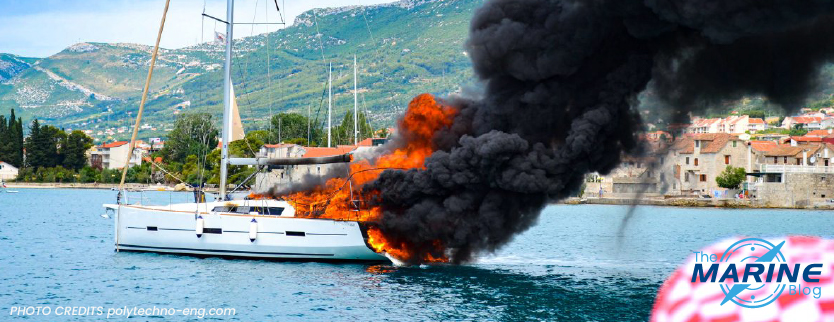
With the boating season now in full swing, it is time to perform a rigorous inventory of your boat. The transition to the new safety regulations has officially concluded: here is how to sail with peace of mind, avoiding fines and ensuring maximum protection for your crew.
The open sea offers an unparalleled sense of freedom, but every skipper knows that true serenity on board comes from meticulous preparation. If you are getting ready for a summer cruise or a simple day trip along our coasts, there is a key detail that deserves your immediate attention. It is the definitive completion of the legislative reform on safety equipment.
The renewal process, initiated with Decree No. 133 (the Implementing Regulation of the Nautical Code which replaced the old 2008 discipline), is now fully operational. Since the final grace period granted to comply with certain devices has also expired, all boaters flying the Italian flag must navigate in full compliance with the new rules.
The legislator’s philosophy moves along a dual track. On one hand, it entails increased strictness and a strong push toward technological innovation to raise survival standards at sea. On the other, it follows a logic of flexibility and simplification that allows for the optimization of weight, bulk, and budget. Let’s see, section by section, how to perform a perfect check-up for your boat.
Life Jackets: Goodbye to Old “Belts” and Total Traceability
Classic personal flotation devices are changing their look and, above all, their name. The generic term “life belts” officially disappears to adopt the more correct term life jackets. However, the most substantial changes concern their management on board:
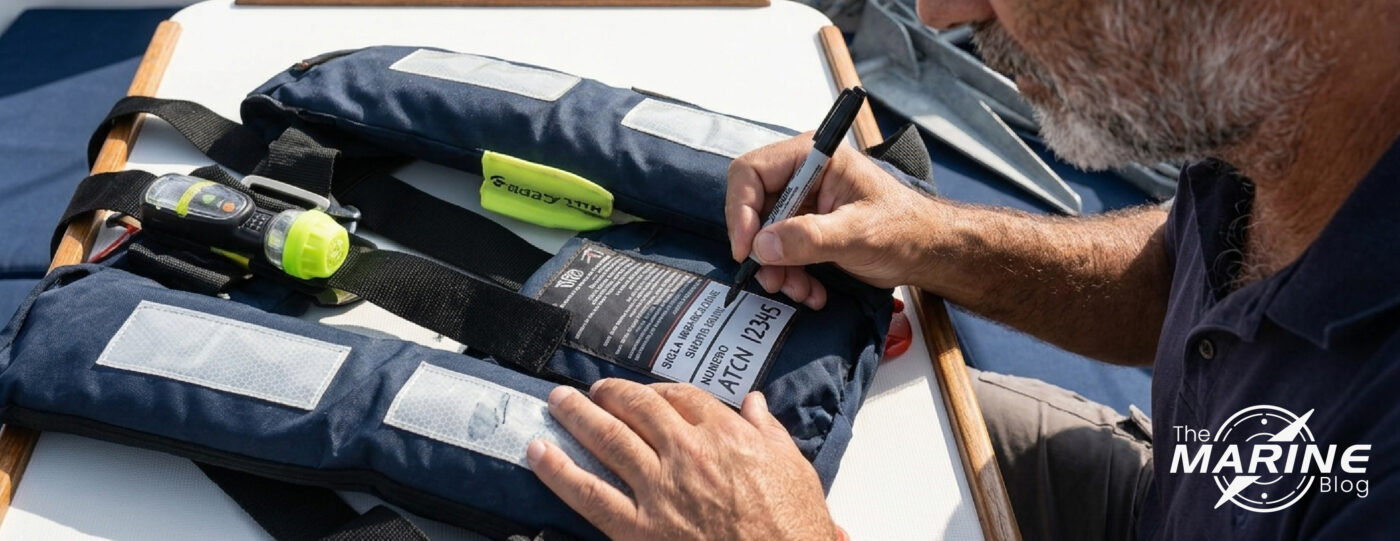
Unique Identification: Each life jacket must now clearly state the validity period set by the manufacturer. Furthermore, the shipowner is required to write the boat’s registration acronym or the digital registration number (ATCN) directly on the device. This means that moving life jackets casually from one boat to another is no longer viable.
Water-Activated Light: For all navigation exceeding 6 miles from the coast, every single life jacket on board (whether foam or inflatable) must feature a built-in light that activates upon contact with water.
When It is Mandatory to Wear Them: The law also intervenes in sailors’ habits. The life jacket must always be worn during solo night navigation. The obligation to wear a buoyancy aid (minimum 50 Newtons) also becomes permanent for sailing dinghies, regardless of the distance from the beach, aligning with what is already required for jet skis, windsurfing, and kitesurfing.
Instrumentation and Safety for Navigation Beyond 6 and 12 Miles
As you venture further from the coast, the bar for prevention rises. If your navigation plans include offshore routes or crossings, make sure you have integrated these elements:
Beyond 6 Miles. It becomes mandatory to keep the Table of Visual Signals (Colreg) on board, which is useful for the daytime and nighttime recognition of lights and collision signals. The requirement to have a clock on board is lowered from 12 to 6 miles. For sailing vessels only, it also becomes mandatory to have at least one safety harness with an ISO/CE approved safety line.
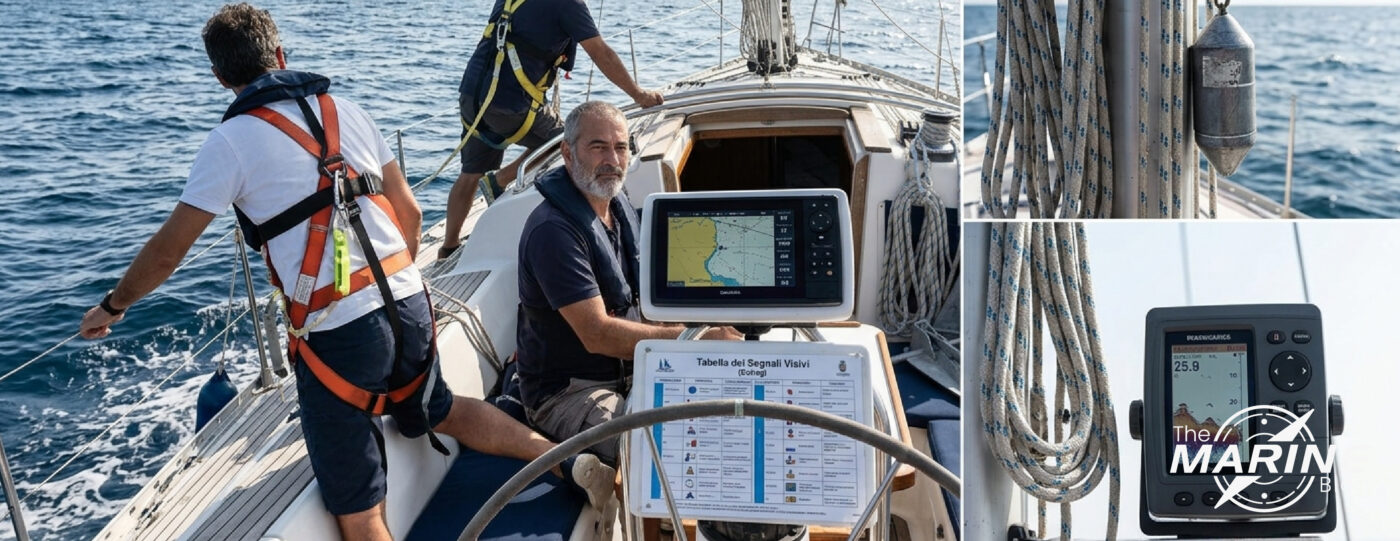
Beyond 12 Miles. The equipment must be enriched with an echo sounder (electronic or manual, provided the latter can measure a depth of at least 20 meters). For sailing boats, the minimum number of safety harnesses rises to two.
Note for Rentals: If you are using a chartered/rented vessel, the rules are even stricter. An echo sounder must always be present on board regardless of the distance from the coast, and if it is a manual type, its line must measure at least 25 meters.
Liferafts and Tenders: More Space on Board Thanks to Simplification
This is perhaps the area where boaters benefit from the greatest practical advantages, thanks to the principle of device equivalence:
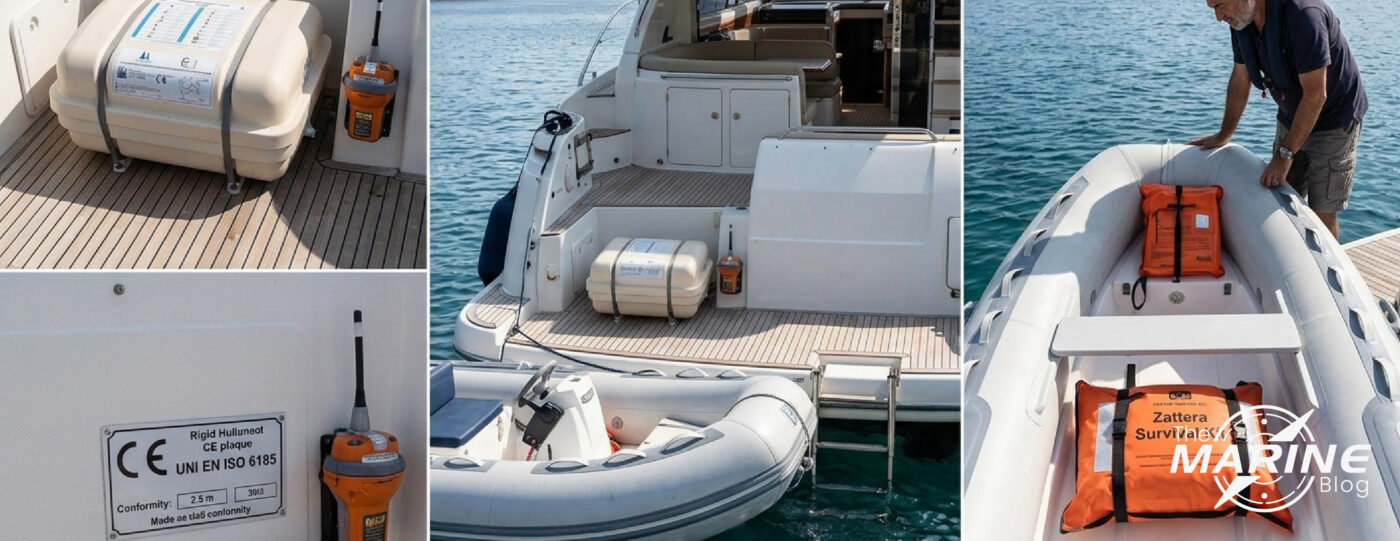
The SAR Zone Turning Point: Those navigating beyond 12 miles can opt for a lighter and cheaper coastal liferaft instead of a bulky ocean liferaft. This applies if they remain within the Search and Rescue (SAR) zone under Italian jurisdiction. The only condition is having an active tracking system on board, such as an EPIRB or a satellite phone enabled for emergency calls to rescue services.
Tender Instead of a Liferaft: Within 12 miles of the coast, the coastal liferaft can be replaced by the service boat (tender). However, the small tender must be CE marked and compliant with UNI EN ISO 6185 standards. It must be at least 2.5 meters long and ready for immediate launching on deck, inflated and upright. It must also be equipped with a boarding ladder and the official survival kit required for liferafts of equal capacity.
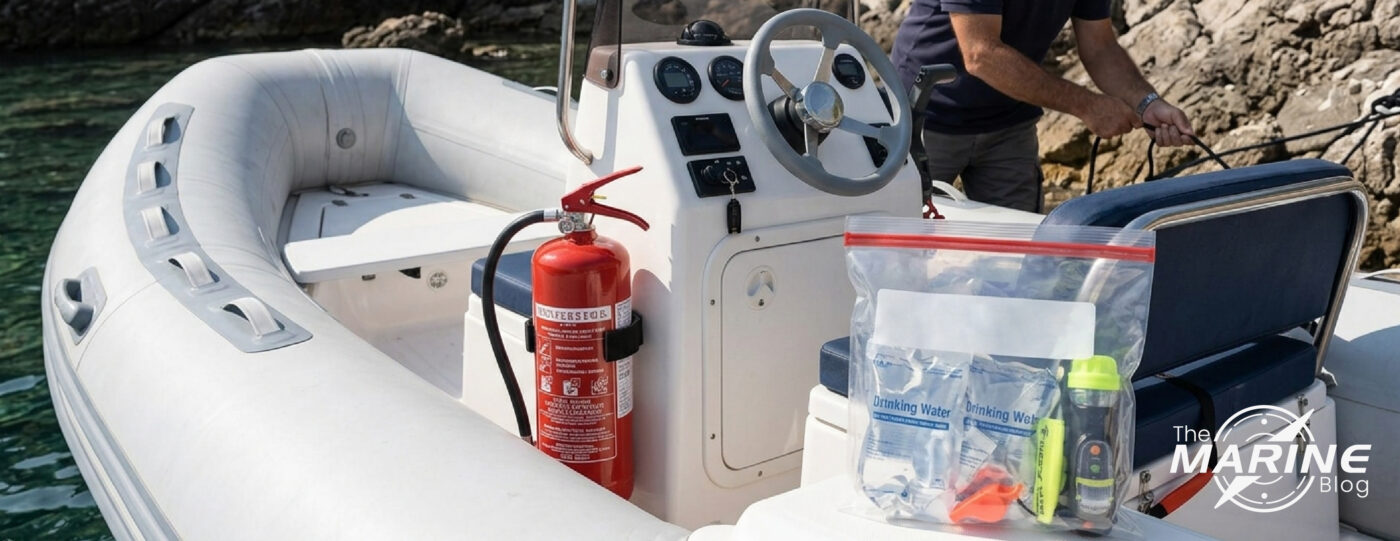
Exemption for Inflatable Boats: Owners of Rigid Inflatable Boats (RIBs) and inflatable crafts (provided they carry a CE marking in category A, B, or C) navigating within 12 miles are completely exempt from the liferaft obligation. However, they must keep an extra fire extinguisher and a sealed survival kit on board, which includes minimum equipment such as drinking water, a waterproof flashlight, a whistle, paddles, and repair material.
Distress Signals and Coastal Details: What Changes Close to Shore
Even for those who prefer day trips and swimming in coves, there are substantial changes to record in the logbook.
The Black Anchor Ball: This becomes mandatory for all vessels over 7 meters in length that anchor more than 300 meters away from the shore. This is a fundamental visual signal to indicate the stationary status to other vessels in transit.
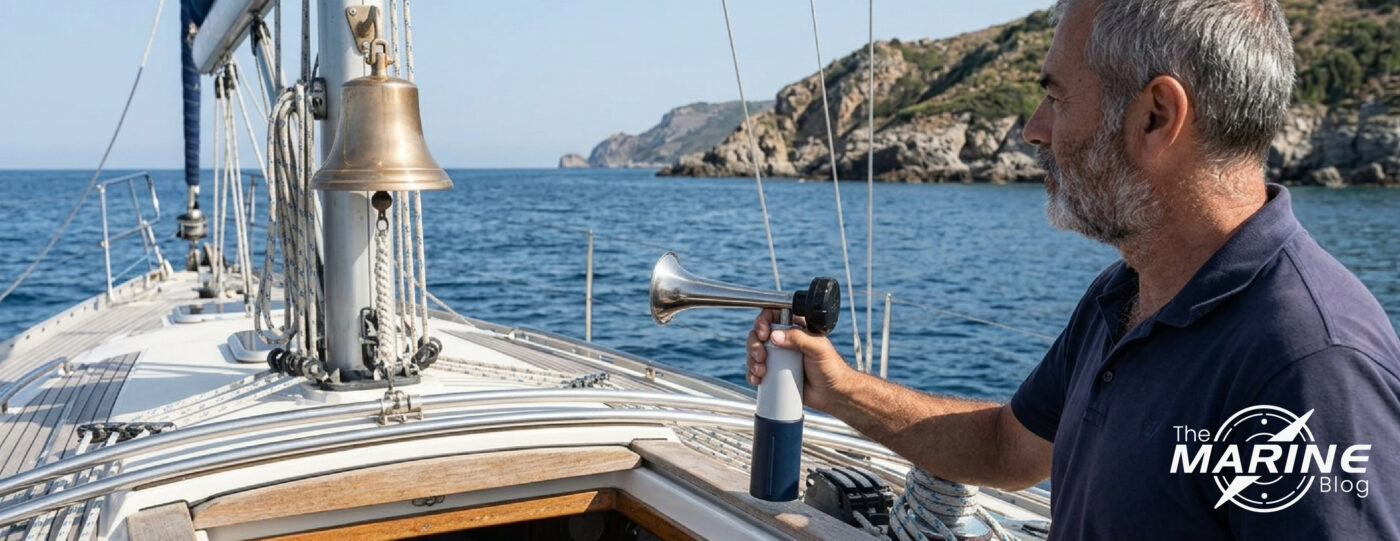
Lifebuoy and Sound Signals: The ring lifebuoy equipped with a line becomes mandatory only after exceeding the first mile from the coast (in the past, the threshold was 300 meters). Regarding sound signals, old horns have been redefined: for vessels over 12 meters, the regulations require a “whistle and bell” beyond one mile from the coast, though the bell can be replaced by an equivalent portable acoustic device.
Simplification of Flares: Smoke and flare signal kits have been simplified into just three standardized packages (within 3 miles, within 50 miles, and unlimited). Furthermore, the way has been opened for the use of modern, Solas Med-certified electronic LED flares to replace traditional pyrotechnic hand flares. These are significantly safer to handle and free from issues related to short expiration dates and the disposal of hazardous materials.
Recommended Equipment and Skipper’s Liability
For the first time, the legislator does not limit itself to imposing legal minimums but draws up an official list of recommended equipment. These are not obligations that can be directly penalized during a routine check, but their absence can carry enormous weight in terms of legal liability.
Among the highly recommended accessories are:
- At least four mooring lines and an adequate towline.
- A second spare anchor for offshore navigation.
- Tracking and alarm systems for Man Overboard (MOB) situations, and a backup magnetic compass if the main one is electronic.
- For sailing vessels beyond 50 miles: shroud cutters, a bosun’s chair, a backup VHF antenna, and a sea anchor.
The reason why this list should not be underestimated lies in the reformulation of the concept of Skipper’s Liability. The regulatory text specifies that the skipper has a duty to equip the boat with all necessary gear based on the actual weather-sea conditions and the distance from safe harbors, stating that they must do so “also by making use of the recommended equipment.” In the event of an accident or unexpected mishap, the choice to have ignored these formal suggestions could constitute gross negligence during a judicial assessment.
Before casting off your moorings for the holidays, dedicate an afternoon to this check-up: navigating informed and protected is the first step to truly enjoying the sea.
For more advice on safety, prevention and responsible navigation, keep following The Marine Blog