In the event of a medical emergency at sea, when near the coast, they are the ones who attend. They are the emergency medical team of maritime ambulances. Here are their on-board roles, duties and responsibilities.
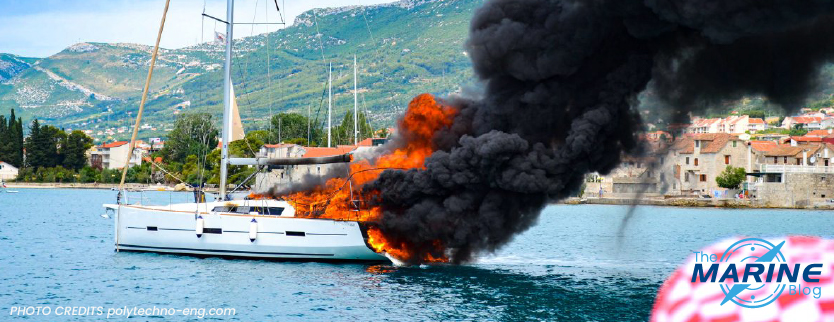
While sailing, whether on pleasure boats or commercial vessels, it can happen that a serious medical emergency occurs on board. It may be a severe trauma suffered due to an accidental fall, for example, in a situation of a man overboard or a blow from a boom to the head, or even a burn while working in the galley or engine room. After all, on a boat one lives in an often cramped environment, always in motion due to waves and wind and constantly exposed to the natural elements. All it takes is a loss of balance, carelessness in handling equipment, and you injure yourself, even seriously.
The medical problem for a crew member, however, can also be entirely personal and sudden, such as an illness or even the onset of a heart attack. Those who are ill while at sea are at a disadvantage compared to those on land in terms of access to the help of the emergency medical team. This is because no qualified medical or health personnel are available on board most pleasure boats and commercial vessels.
The maritime ambulance, decisive near the coast
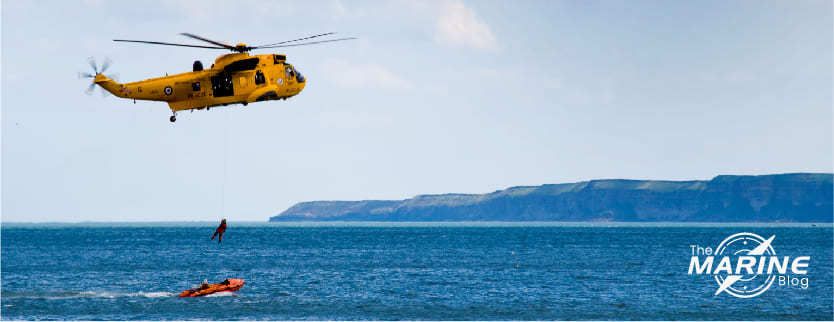
In the event of a medical emergency at sea, depending on the distance from the coast and the seriousness of the problem, there are three possible intervention scenarios: one can either return immediately to the mainland and go to the hospital, or use the helicopter rescue service, or be assisted by a specific vessel, the maritime ambulance.
The latter is generally a motorised, cabin-rigged vessel, able to navigate quickly and cope with any weather conditions. But it is also a technical medical vessel, equipped with medical supplies and equipment for the treatment, stabilisation and transport of the patient. On board every medical rescue vessel there is always an emergency medical team of professionals, whose experience, preparation and teamwork are key factors in the success of the maritime intervention.

The medical emergency team of a maritime ambulance
But what are the roles on board? Four operators are usually on board each maritime ambulance, all highly specialised and each responsible for specific tasks and duties: the conductor, the doctor, the nurse and the rescuer. Let’s see in detail who the medical emergency team is and what they do during interventions.
Let’s start with the conductor. In line with the provisions of the Navigation Code, this figure is in fact the captain of the vessel, the person who assumes full responsibility towards the entire crew for everything concerning navigation, on-board arrangements and technical-operational choices, including the embarkation and disembarkation of the patient. The person in this role must be perfectly familiar with the vessel, its equipment and the coastal stretch where the operation is to take place. He then plans the time and route to be followed, any critical factors in the area of intervention, and studies the meteorological informations.
In order to perform this role, it is necessary to be qualified to command pleasure craft, the classic nautical licence, supplemented, however, by specific training on the conduction of rescue vessels, as well as first aid qualification. You also need considerable experience in the nautical field, as well as in emergency and team management.
Doctor on board, responsible for medical intervention at sea
Another key role on board the water ambulance is the doctor. This figure is responsible for the entire medical part of the intervention, working in coordination with the Operations Centre. The presence of this figure makes the unit an advanced rescue vehicle (MSA). The doctor takes charge of the patient, assesses the criticality of the intervention and makes the first medical diagnosis. He then proceeds with the required rescue, including life-saving manoeuvres, pharmacological treatment and stabilisation of vital parameters.
To hold this position, a degree in Medicine and Surgery and registration on the professional medical register are required. Followed by specialisation and a certificate of suitability for practising in territorial health emergencies.
Nurse, the operational arm of maritime medical care
Then there is the nurse, who is responsible for the entire management of the practical part of the medical intervention. His or her tasks include checking the medical equipment on board, treating the patient including some invasive manoeuvres (e.g. venous access). As well as fully supporting the doctor in advanced rescue procedures and preparing and administering the indicated medicines.
Those performing this role must hold a degree in nursing, be registered in the respective professional register and have adequate training in out-of-hospital rescue.
The rescuer, the most versatile member of the medical emergency team
Finally, completing the basic medical emergency team of a water ambulance is the rescuer. The skills and tasks of this figure are spread over three fronts. First and foremost, the rescuer is an on-board technician. He, in line with the captain, takes care of all the practical aspects related to the management of the vessel and navigation. Then he is an aquatic rescuer and is the only member of the medical emergency team trained, equipped and authorised to enter the water (for example to rescue a drifting person), an operation that always takes place on the decision of the vessel’s captain. Lastly, it is a 118 rescuer, so it gives full support to the medical personnel when dealing with the patient, providing skills similar to those possessed by rescuers of normal ambulances on land.

Everyone has their own tasks, but it is the team that wins
The duties of each individual member of a maritime ambulance medical emergency team, as you can see, are extremely specific and strictly linked to a hierarchical order. The same as is the case with all seamen. In theory, it could be said that half the crew deals with the technical-naval part and the other half with the medical part.
As is the case in all rescue teams, however, even at sea sometimes the roles overlap. Because of that, it is essential that everyone cooperates and supports each other, while fully respecting everyone’s responsibilities and skills. Indeed, it is the team spirit, as well as the professionalism and moral qualities of these professional operators, that is the real watershed between the failure of a mission and the saving of a human life.
To read more articles like this in the future, visit The Marine Blog!